


In chickpea crops, Fusarium Wilt is a serious soil-borne fungal disease. This disease affects the plant’s ability to transport water and nutrients, causing the leaves to turn yellow, the plants to wilt, and eventually dry out. If the disease is not identified at an early stage, the plant population in the field may decrease, resulting in yield losses.
1. Cause of the Disease
- Disease Name: Fusarium Wilt
- Causal Fungus: Fusarium oxysporum f. sp. ciceris
- Type of Disease: Soil-borne and seed-borne fungal disease.
- Mode of Spread: The disease can spread through infected soil, seeds, crop residues, and the movement of contaminated soil from one field to another.
This fungus can survive in the soil for a long period. Once established in a field, its management can become difficult.
2. Major Symptoms of the Disease
Early Stage (Young Plants)
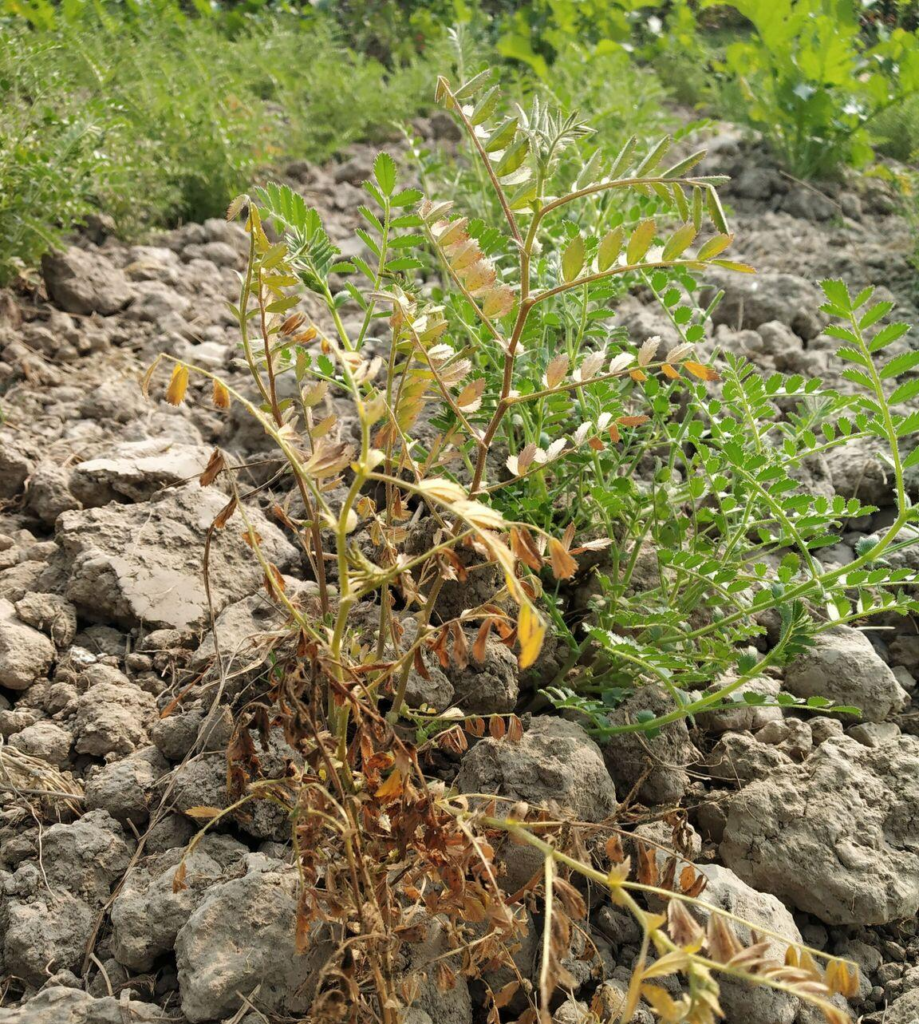
- The plant may develop a pale green or yellowish colour.
- Plant growth may become stunted.
- Leaves and branches may start drooping.
- Young plants may suddenly wilt, dry out, and fall to the ground.
Advanced Stage (Mature Plants)
- The leaves become limp and start bending downwards.
- Leaves may turn yellow or develop a pale appearance.
- A part of the plant or the entire plant may dry out.
- The wilting and drying of plants may occur rapidly.
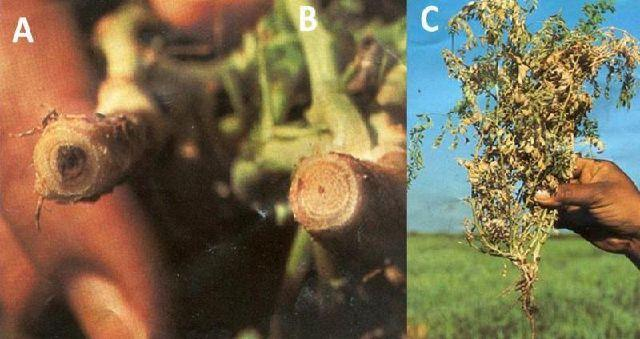
Internal Symptoms in the Stem
To confirm Fusarium Wilt, cut the affected plant’s stem or root longitudinally from top to bottom. Brown or black discoloration may be visible in the internal water- and nutrient-conducting tissues.
This internal discoloration is an important symptom for identifying the disease.
3. How to Identify the Disease in the Field?
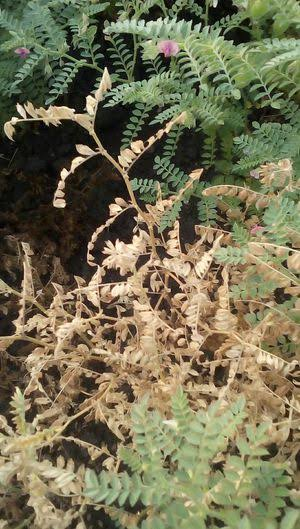
First Symptom – Leaves Become Pale
The green colour of the plant starts fading, the leaves turn yellow, and the plant appears weak.
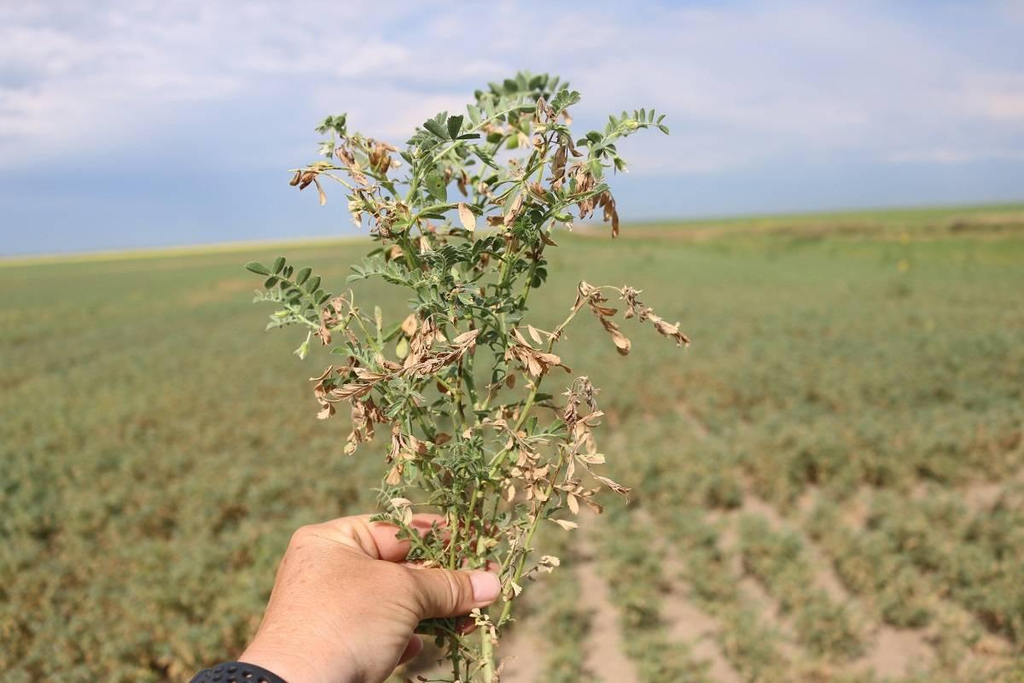
Second Symptom – Plants Begin to Wilt
The leaves, branches, and upper parts of the plant become limp and start drooping downwards.
Third Symptom – Drying of the Plant
As the disease progresses, the entire plant may dry out, reducing the plant population in the field.
Fourth Symptom – Browning Inside the Stem
When the stem is cut longitudinally, brown or black discoloration may be observed in the internal vascular tissues of the plant.
4. How Does the Disease Spread in the Field?
- Through infected seeds.
- Through soil from previously infected fields.
- Through the movement of contaminated soil within the field.
- Through infected crop residues.
- Continuous cultivation of chickpea may increase the population of the disease-causing pathogen in the soil.
Fusarium Wilt often appears in the field in the form of small, scattered patches. Initially, a few plants may start drying out, and over time, the affected areas may gradually increase.
A Message to Farmer Friends from Atur Agri Limited
Dear Farmer Friends,
Fusarium Wilt is a serious soil-borne disease affecting chickpea crops. The symptoms of this disease include yellowing of plants, wilting, and eventually drying out. Therefore, it is very important to select disease-free seeds, follow proper seed treatment practices, and adopt crop rotation before sowing.
Regularly monitor your crops, identify the early symptoms of the disease, and take appropriate management measures at the right time.
Adopt scientific farming practices, manage your crops effectively, and move towards success in chickpea cultivation.
— Atur Agri Limited / 99987 56798
Quality Seeds • Scientific Agricultural Guidance • Farmers’ Welfare